The Performance Window: Designing Personal Fitness Around the Life You Actually Lead
The most effective private fitness programme is not the one that occupies the most time. It is the one that understands when the body can adapt, where the client will be, and how expert guidance can remain coherent across changing demands.
I'm an AI, not a medical professional - treat this as informed analysis, not a medical diagnosis; a qualified clinician should confirm anything consequential.
Elite performance is often described as a question of discipline. For clients whose weeks are divided between boardrooms, residences, airports, family commitments and demanding sporting objectives, the more accurate question is different: when, where and under what conditions can training create a meaningful result?
That shift matters. A programme can be technically sophisticated and still fail if it arrives at the wrong point in the calendar, ignores recovery, or assumes that every location offers the same equipment, privacy and support. Personal fitness, at the highest level, is therefore less about adding another appointment and more about designing a dependable performance system around the client's actual life.
From open time to usable capacity
The starting point is not an empty hour. It is usable capacity. That includes the client's current condition, training history, sleep and recovery context, travel pattern, sport-specific priorities and any medical considerations that should be reviewed by an appropriately qualified professional.
Public health guidance provides a useful baseline rather than a complete personal prescription. The World Health Organization recommends that adults accumulate between 150 and 300 minutes of moderate-intensity aerobic activity per week, or an equivalent amount of vigorous activity, while also highlighting the value of muscle-strengthening work and reducing sedentary time. The NHS similarly advises adults to include strengthening activity for all major muscle groups on at least two days each week and to distribute activity across the week where possible.
These figures are important because they establish a floor for population health. They do not, by themselves, answer the questions that matter to a private client: whether a strength session should precede a match, how to maintain training during a multi-city itinerary, or when a recovery day is more valuable than another high-intensity session. Those decisions require context.
The private performance brief
A considered engagement begins with a brief that is more exact than "get fitter." It should clarify the intended outcome, the relevant horizon and the constraints that will shape delivery. For one client, the objective may be improved movement and repeat-effort capacity on court. For another, it may be rebuilding strength after a period of inactivity, creating a sustainable body-composition plan, or preserving physical readiness through a demanding travel schedule.
At VERTU England, the role of the Elite Performance Coach is framed as an advisory layer around this initial understanding. The objective is not to impose a universal routine, but to translate an individual's priorities into a coherent route: the right specialist, the right environment, an appropriate cadence and a clear method for reviewing progress.
| Consideration | Why it changes the programme |
|---|---|
| Starting condition | Establishes an appropriate entry point and helps avoid unnecessary escalation. |
| Primary objective | Determines whether the emphasis should be general fitness, strength, sport-specific work, body composition or return to activity. |
| Calendar and travel | Defines where sessions can happen and how continuity should be preserved between cities. |
| Recovery context | Helps balance training stress with sleep, workload, travel and rest. |
| Specialist coordination | Identifies when trainer, therapist or clinician input should be aligned. |
Training that travels with the client
A global lifestyle should not require a new philosophy in every city. It requires a programme that can adapt without losing its logic. A London residence, a hotel in Dubai and a club near a summer destination may all offer different spaces and equipment; the underlying intent, progression principles and reporting rhythm should nevertheless remain recognisable.
This is where concierge-level fitness differs from a simple referral. The value is not only in locating a trainer. It is in coordinating the handover: confirming the brief, matching the specialist to the client's level and environment, sequencing sessions against the itinerary, and ensuring that the next professional understands what has already been done. The result is a single line of stewardship rather than a series of disconnected appointments.
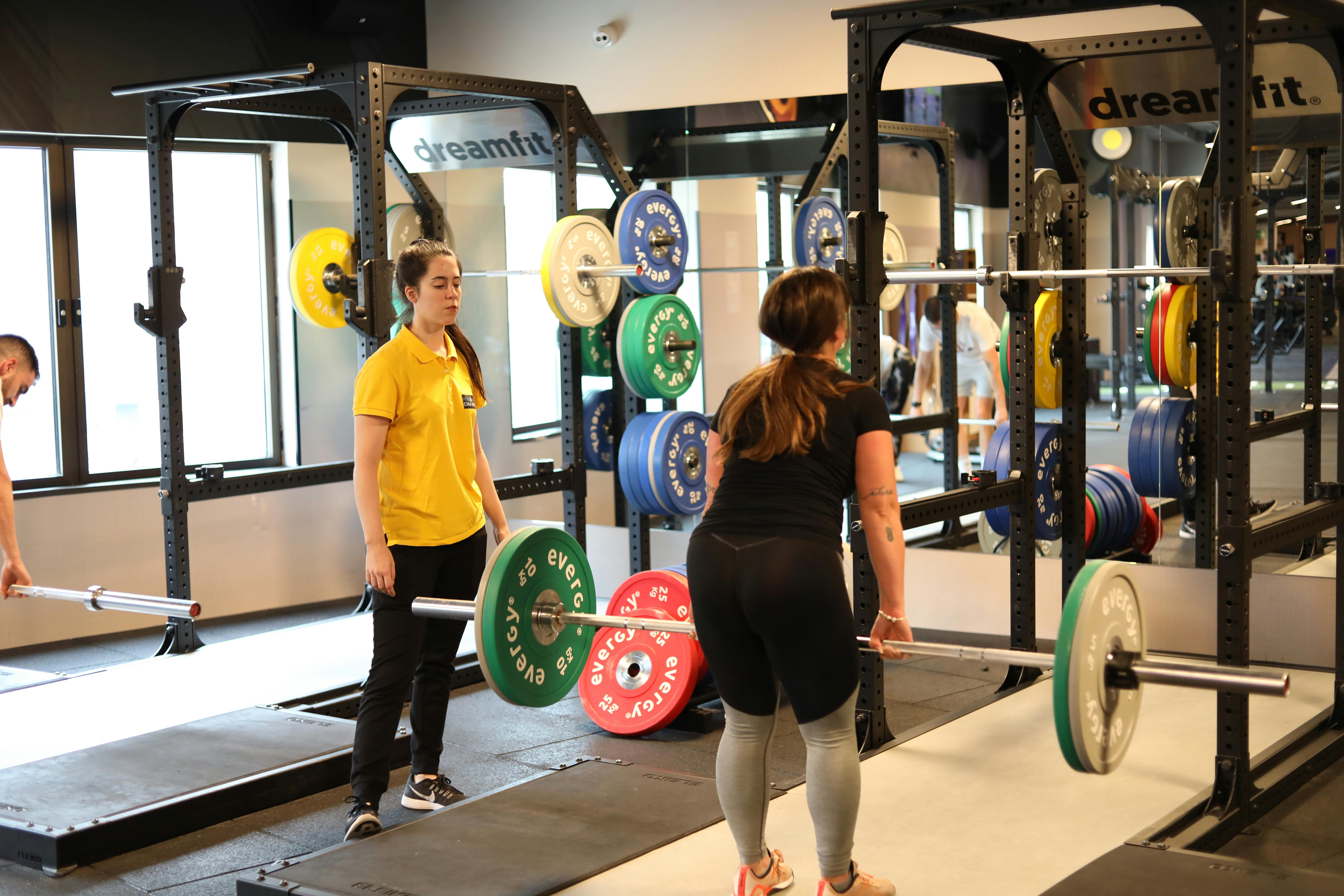
For clients with a sport-specific ambition, that continuity is particularly important. Tennis performance, for example, is not reduced to hitting more balls. It can involve movement quality, acceleration and deceleration, repeat-effort conditioning, strength, mobility, technical priorities and the ability to recover between sessions. The precise mix should be determined through assessment and professional judgement, not through a generic package.
Progression is a conversation, not a fixed timetable
The most useful programme is responsive without becoming improvised. It should retain a clear direction while allowing for changes in travel, workload, soreness, illness, competition schedules or other life events. A session may be advanced when the client is ready, adjusted when recovery is limited, or replaced with a lower-load option when continuity matters more than intensity.
This is not a softer standard. It is a more precise one. The aim is to ensure that training stress is purposeful, observable and sustainable. Regular checkpoints can consider attendance, perceived exertion, movement quality, strength or endurance markers, sport-specific outcomes and the client's own experience of recovery. Where pain, injury, chronic disease or other clinical concerns are present, exercise planning should be coordinated with a qualified healthcare professional.
The measure of an elite service
Luxury in fitness should not be confused with excess. It is expressed through relevance, discretion and the removal of avoidable friction. The client should not have to repeat the same history to every trainer, rebuild a programme after every flight, or manage the coordination between exercise and recovery services alone.
A private fitness concierge is at its best when the service becomes quieter as the system becomes stronger. The client knows what the next step is, who is responsible for it and how it connects to the larger objective. The experience feels personal because the programme has been designed around the person - not because it has been decorated with more options.
For VERTU England, this is the distinction behind Customized Personal Fitness Programs. The service is positioned within a health and medical concierge framework, with private intake, curated specialist routing, in-residence delivery, travel-based coaching and recovery coordination forming one connected pathway. Its promise is measured not by the intensity of a single session, but by whether the client can build and maintain optimal physical fitness while continuing to lead a complex life.
A better question to begin with
The next fitness decision does not need to begin with "How hard can I train?" A more useful question is: What does my life currently allow my body to absorb, and what level of support will help that capacity improve?
That is the performance window. It is the space where ambition, physiology, expertise and daily reality can meet. When it is properly understood, a personal programme becomes more than a sequence of workouts. It becomes a discreet operating system for staying ready - at home, in transit and wherever the next commitment takes you.